Request Advisory Session
Home About The Book Network Advisory Speaking Insights Contact
Golden illuminated map of Africa — AI Sovereignty Network
Africa's Strategic Fight for AI Sovereignty

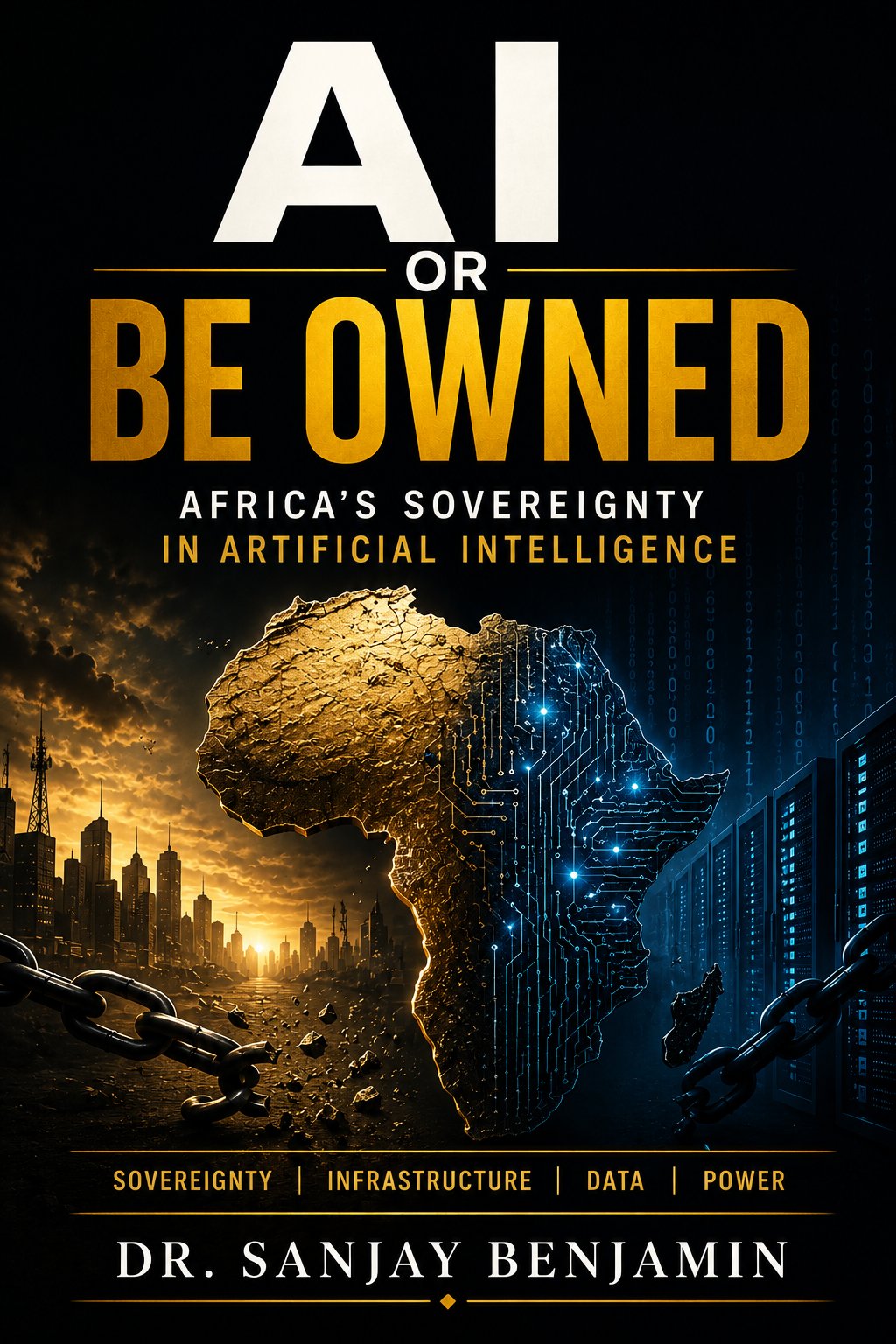
AI orBe Owned

Africa's Strategic Fight for Sovereignty
in the Age of Artificial Intelligence

Dr. Sanjay Benjamin is the founder of the AI Sovereignty Network — helping African governments and enterprises build sovereign AI strategies, digital infrastructure resilience, and independent technological futures.

Free Download
Africa's AI Sovereignty Executive Brief
15-page strategic briefing for Ministers, Central Banks, Regulators & CEOs
Dr. Sanjay Benjamin
Dr. Sanjay Benjamin
Founder, AI Sovereignty Network
About Dr. Benjamin

Three Decades at the Intersection of AI and African Development

Dr. Sanjay Benjamin is a technology strategist, AI sovereignty advocate, and author with more than three decades of experience advising African governments, central banks, and enterprises on digital sovereignty, National AI Strategy development, and foreign technology contract negotiation.

He has been in the rooms where Africa's technology agreements get signed — and has seen, first-hand, how the digital dependency architecture is built. AI or Be Owned is the intelligence briefing and action framework those rooms produced.

Experience
35+ years in African government technology strategy & AI advisory
Network
Active across 54 African nations — ministers, governors & CEOs
Published
AI or Be Owned — Hay House, 2026
Speaking
AU summits, ministerial forums, central bank conferences globally
Why Dr. Sanjay Benjamin
35+ years experience with multinationals including IBM and Lenovo
Worked across Uganda, Kenya, Tanzania, Nigeria, South Africa, Dubai & UK
Led multiple government, banking, and corporate AI transformation programmes
Founder of the AI Sovereignty Network — active across 54 African nations
Author of AI or Be Owned — Africa's definitive AI sovereignty guide
Book Dr. Benjamin →
Engaged With & Advisory To
Government
Institutions
Central
Banks
Regulators &
Policy Bodies
Technology
Leaders
Academic
Institutions
Development
Agencies

Organisation names available on request — all engagements are confidential by default

The AI Sovereignty Crisis

Africa Is Entering the AI Century Without Sovereign Control

Critical infrastructure, data, and algorithms are increasingly controlled by foreign powers. The cost of inaction is permanent dependency, economic leakage, and digital colonisation.

Learn More →
🌐
570M+
Internet Users in Africa
Growing at 40% annually
🤖
$4.5B
Africa's AI Market Value (2025)
Just 1.85% of the global AI market
📈
$2.9T
AI Potential Contribution by 2030
To Africa's economic output
☁️
>90%
Critical Data Stored Outside Africa
A sovereignty risk we cannot ignore
Proprietary Methodology

The AI Sovereignty Framework™

Seven interdependent pillars that together constitute a complete sovereign AI architecture — developed over 35 years of advisory work across African governments, central banks, and enterprises.

Pillar 1
Data Sovereignty
Click to explore →
Pillar 2
Infrastructure Sovereignty
Click to explore →
Pillar 3
AI Capability
Click to explore →
Pillar 4
Talent Sovereignty
Click to explore →
Pillar 5
Financial Sovereignty
Click to explore →
Pillar 6
Regulatory Sovereignty
Click to explore →
Pillar 7
Strategic Partnerships
Click to explore →
Apply the Framework → Used in 12+ national AI strategy engagements across Africa
The Book

AI OR BE OWNED

A powerful geopolitical and strategic exploration of how Africa can navigate the AI century with sovereignty, resilience, and independence.

🌍Geopolitical Intelligence
📋Real-World Case Studies
🎯Strategic Frameworks
Actionable Solutions
What Leaders Are Saying

"Essential reading for every African government minister and central bank governor navigating the AI century."

— Senior Government Technology Advisor, East Africa

"The most important AI strategy framework written specifically for African institutions. Required reading."

— Chief Digital Officer, African Financial Institution

"Dr. Benjamin names what others won't — and provides the roadmap to act on it."

— Technology Policy Researcher, Southern Africa
AI Sovereignty Network

Building Africa's AI Sovereignty Movement

A community of ministers, central bank governors, regulators, enterprise leaders, and innovators collaborating to build sovereign AI ecosystems across the continent.

🤝Policy Collaboration
🧠Strategic Intelligence
🔧Capacity Building
🌍Continental Impact
Join the Network →
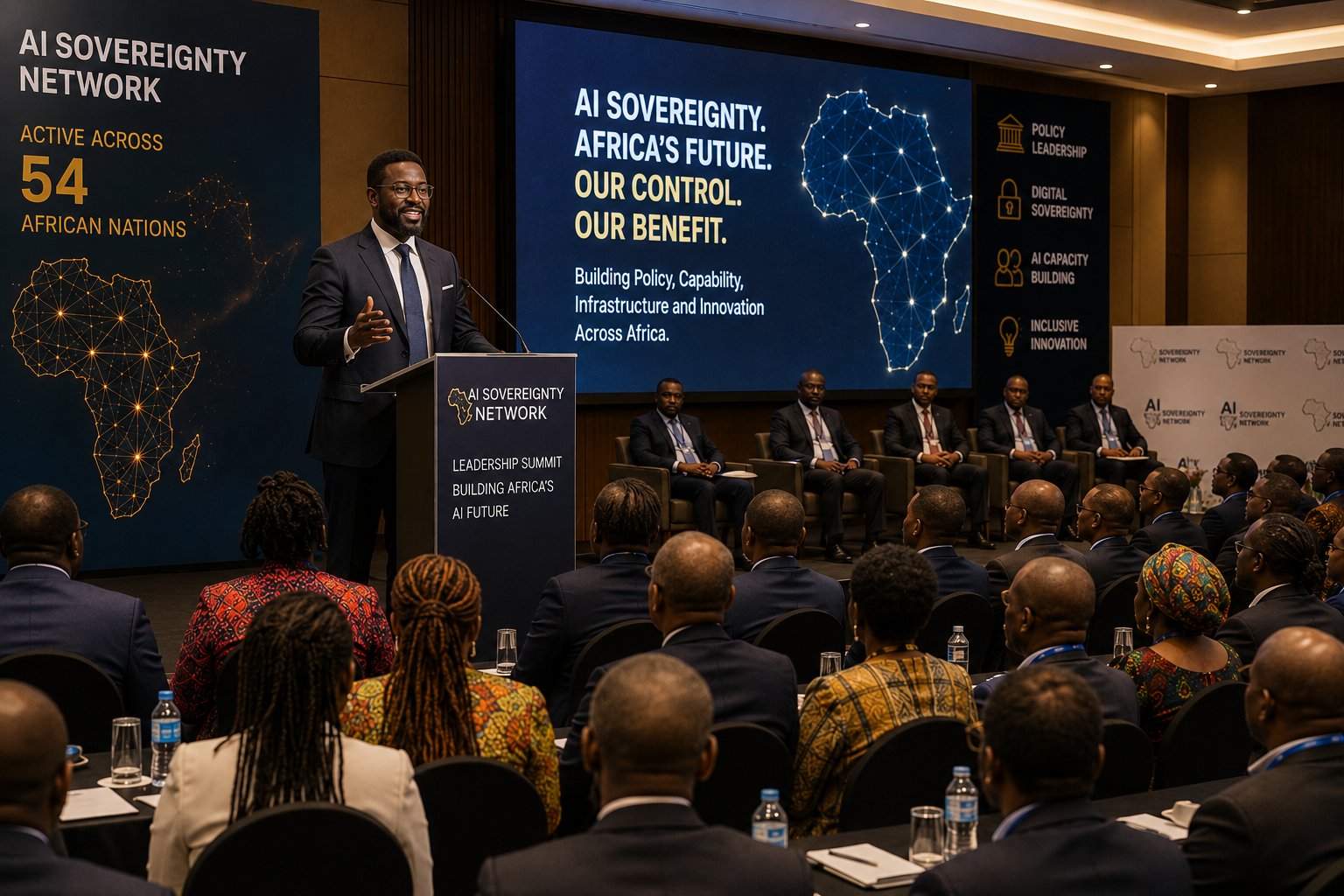
AI Sovereignty Network Leadership Summit
AI Sovereignty Network — Active across 54 African nations
Government & Enterprise Advisory

Strategic Advisory for a Sovereign AI Future

All engagements are tailored, confidential, and impact-driven.

Book Consultation
🏛️
Government AI Strategy
National AI strategies, digital transformation roadmaps, and sovereign capability development for African governments.
Learn More →
🏦
Central Bank AI Sovereignty
AI policy, regulatory frameworks, financial stability, and digital currency strategy for central banks.
Learn More →
🏢
Enterprise AI Transformation
AI strategy, implementation, use cases, governance, and measurable business outcomes for enterprises.
Learn More →
⚖️
AI Governance & Policy
Ethical AI regulation, standards, risk frameworks, and governance structures built for African contexts.
Learn More →
🖥️
Infrastructure Sovereignty
Data centers, cloud strategy, compute infrastructure, and digital resilience planning.
Learn More →
Who We Serve

Identify Your Path to AI Sovereignty

Governments
  • National AI Strategies
  • Digital Sovereignty Policy
  • AI Governance Frameworks
  • Tech Contract Negotiation
Central Banks
  • AI Risk & Regulation
  • CBDC Strategy
  • Financial Data Sovereignty
  • Fintech Governance
Enterprises
  • AI Transformation
  • Data Strategy
  • AI Governance
  • Sovereign AI Implementation
Dev Agencies
  • Digital Sovereignty
  • AI Capacity Building
  • Policy Frameworks
  • Continental Programmes
Keynote Speaking

Engaging Audiences.
Inspiring Action.

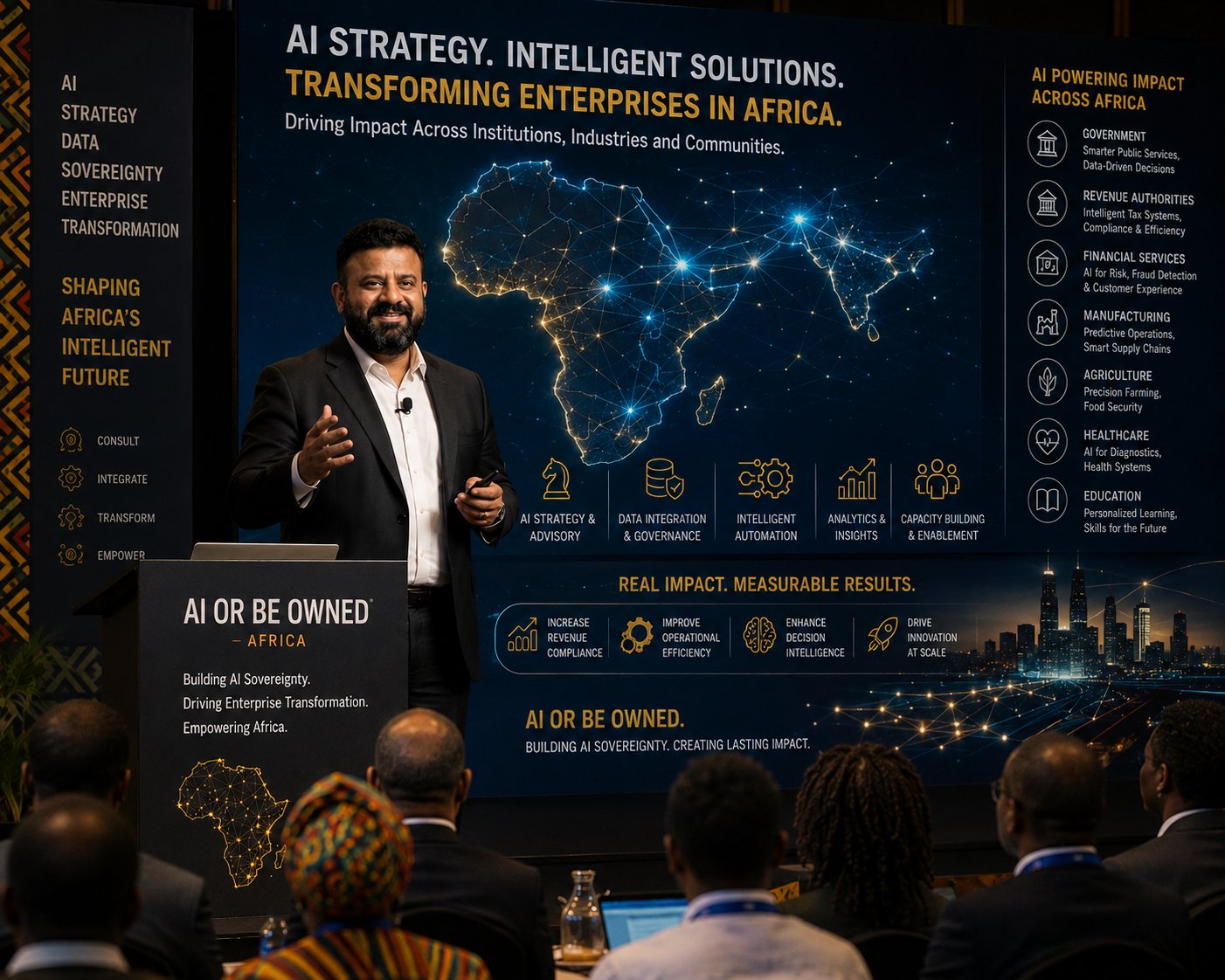
Dr. Sanjay Benjamin delivers high-impact keynotes on AI sovereignty, digital geopolitics, and Africa's technological future — tailored for decision-makers who must act.

35+
Years Experience
7+
Countries Reached
54
Nations Network
C-Suite
Audience Level
🌐
Global Conferences
🏛️
Government Forums
🏆
Executive Summits
🎓
University Lectures
Invite Dr. Benjamin →
Dr. Sanjay Benjamin delivering a keynote on AI Sovereignty
Dr. Sanjay Benjamin
AI Sovereignty Strategist & Author
AI Sovereignty Intelligence Center

Strategic Intelligence. Sovereign Decisions.

Read the latest articles, frameworks, and strategic insights on AI, geopolitics, and digital sovereignty.

Read Insights
🌐
Analysis

The New Digital Colonisation

Africa was colonised once through physical force. Today, a second colonisation is underway — quieter, faster, and far more difficult to reverse. The tools are not guns and treaties. They are cloud contracts, platform dependency, and data extraction at continental scale.

In 2025, four foreign technology companies process more African financial data than all 54 African governments combined. Not a single byte of that data lives on African soil. Not a single cent of the advertising revenue it generates returns to African institutions. This is not an accident. It is the predictable outcome of a four-stage dependency playbook that has been executed with precision across the continent — the same playbook, in digital form, that enabled physical colonisation two centuries ago.

Stage One was the Entry Gift — free platforms, subsidised technology, below-market infrastructure loans offered at the moment when African digital infrastructure was most underdeveloped and most receptive. Stage Two was Adoption Deepening — staff trained on foreign systems, institutional workflows redesigned around foreign architectures, data migration begun. Stage Three was Lock-In — multi-year contracts with exit penalties, proprietary data formats that make migration prohibitively expensive, governance annexes transferring sovereign rights that nobody read carefully enough at signing. Stage Four is Sovereign Surrender — the stage at which foreign control of data, infrastructure, pricing, and increasingly policy has become so structurally embedded that reversing it requires a national transformation program rather than a procurement decision.

Most African nations are currently between Stage Three and Stage Four. The window to act is open. It will not remain so indefinitely. The question every African leader must answer is whether they will use it.

May 12, 2026
Contact →
🤖
Strategy

Why Africa Needs Sovereign AI

There is a dangerous assumption embedded in most African AI discussions — that the primary question is adoption. How quickly can African institutions deploy AI? Which foreign platforms are most suitable? What technical capacity is required? These are the wrong questions. The right question is: whose AI will govern Africa's future?

AI systems are not neutral tools. They encode the values, priorities, and assumptions of whoever built them and whatever data trained them. An agricultural AI trained on North American or European farming data will give systematically wrong advice to African smallholder farmers. A credit scoring AI trained on formal sector financial behavior will systematically exclude the 350 million Africans whose economic lives are primarily informal. A healthcare diagnostic AI trained on patient populations that do not include African genetic diversity will deliver inferior outcomes for African patients.

African sovereign AI is not nationalism dressed up as technology policy. It is the practical requirement for AI systems that actually work for African people. And it is the economic imperative of ensuring that the extraordinary value generated by African data — the behavioral intelligence, market patterns, agricultural knowledge, and financial activity of 1.47 billion people — accrues to African institutions rather than to foreign shareholders.

The 7-Pillar Sovereign National AI Strategy framework provides the architecture: Data Sovereignty, AI Infrastructure, Talent Pipeline, Regulatory Framework, Financial Architecture, Enterprise Enablement, and International Partnerships. Together they constitute not a wish list but a 90-day sprint plan — achievable within a single political term, urgent enough that delay has measurable and compounding costs.

May 5, 2026
Contact →
💳
Finance

The Fintech Dependency Trap

In 2007, Kenya's Central Bank said yes to M-Pesa. What followed was the mobile money revolution that transformed financial access for hundreds of millions across Africa. Nineteen years later, the infrastructure that revolution built is increasingly owned by foreign shareholders, its transaction data processed outside African jurisdiction, and its commercial returns flowing to investors in London and New York.

This is the fintech dependency trap — and it follows a sequence so consistent across markets that its stages can be predicted with confidence. Innovation Vacuum: formal banking fails the majority, creating genuine need. Scale Imperative: rapid growth requires foreign capital, and governance rights are exchanged for the capital needed to achieve network scale. Foreign Capital Entry: investors acquire stakes, and strategic direction begins reflecting foreign shareholder interests. Regulatory Lag: governance frameworks are not designed for hybrid fintech entities, and foreign interests shape market structure while regulators are still designing the framework to govern it. Dependency Entrenchment: the platform has become critical infrastructure, and regulatory action now carries service disruption risk — the leverage has inverted. Extraction Normalisation: billions in annual value extraction are accepted as the cost of financial inclusion.

Digital payments in South Africa alone are projected to reach $28 billion by 2027. At the continental scale, the annual value extracted from African financial infrastructure by foreign-owned platforms runs to tens of billions of dollars. Every dollar extracted is a dollar not available for African development, African institutions, or African citizens.

The sovereign counter-strategy requires three parallel tracks: Financial Data Sovereignty Legislation that mandates transaction data storage within national jurisdiction; a CBDC Development Program that creates a sovereign payment rail alongside foreign-controlled infrastructure; and Payment Infrastructure Ownership Transition that progressively increases African ownership of systemically important payment systems.

April 28, 2026
Contact →
🏗️
Infrastructure

AI Infrastructure Is the New Oil

In the twentieth century, the nation that controlled oil infrastructure controlled the economic destiny of the nations that depended on it. In the twenty-first century, the same logic applies to AI infrastructure — the data centers, compute capacity, undersea cables, and platform architectures through which artificial intelligence is trained, deployed, and monetised.

Africa holds less than one percent of global data center capacity despite hosting nineteen percent of the world's population. Every African government system hosted on foreign cloud infrastructure is sovereignty given away. Every AI model trained on African data and processed on foreign servers is value extracted without return. The infrastructure map of African digital life looks, in important respects, like the infrastructure map of colonial Africa — built by foreign powers, for foreign benefit, on African soil.

But the analogy is not simply diagnostic. It is also prescriptive. The nations that understood oil infrastructure as a sovereignty asset — and built or reclaimed national capacity to own, control, and benefit from it — achieved development outcomes qualitatively different from those that did not. The same dynamic is now available to African nations in the AI infrastructure domain, with one critical difference: the window for action is significantly shorter.

Africa's data center market is projected to grow at over 12% CAGR through 2028, potentially reaching $10 billion. The infrastructure is being built. The question is who owns it when it is complete. South African telecom companies demonstrated that African sovereign infrastructure investment at scale is achievable — investing approximately $11.45 billion over five years in fiber and data center infrastructure. The model exists. The capital is available. What has been missing, in too many cases, is the political will to treat AI infrastructure as what it is: the oil of the twenty-first century, and the most important sovereign asset Africa has the opportunity to claim before others claim it first.

April 20, 2026
Contact →
Signature Programme

Start Your 90-Day AI Sovereignty Sprint

A structured engagement that takes your organisation from AI dependency audit to sovereign AI roadmap — designed for African governments and enterprises that need to act now.

Book Advisory Session →
1–4
Weeks 1–4
Assessment
AI dependency audit, data sovereignty mapping, infrastructure gap analysis, and stakeholder alignment across your organisation.
5–8
Weeks 5–8
Strategy
National or enterprise AI sovereignty roadmap, regulatory framework design, and the 7-Pillar implementation architecture tailored to your context.
9–12
Weeks 9–12
Execution
Priority initiative launch, stakeholder engagement plan, quick wins implementation, and ongoing governance structure for sustained sovereign AI development.
Africa Still Has Time To Shape Its AI Future.
Let's build it. Together.
Get In Touch

Start the Conversation

Whether you are a government minister, central bank governor, enterprise leader, or event organiser — reach out to discuss how we can build Africa's sovereign AI future together.

✉️
🌍
Website
www.aiorbeowned.africa
📱
WhatsApp / Mobile
+256 791 233 607
Coming 2027

Africa AI Sovereignty Index™

The first independent annual ranking of all 54 African nations on their progress toward AI sovereignty — measured across infrastructure, talent, regulation, and AI readiness.

Register Your Interest →
54
African Nations Ranked
7
Sovereignty Pillars Measured
40+
Data Indicators
2027
First Edition Launch